Table of Contents
ToggleCrazy ants don’t march in tidy lines, they zigzag across countertops, swarm electrical outlets, and infiltrate spaces where typical ant baits barely make a dent. Unlike their more predictable cousins, these erratic invaders earned their name from their chaotic, unpredictable movement patterns. They’re notoriously difficult to eliminate because colonies split and relocate when threatened, and they ignore most conventional ant baits. Homeowners facing a crazy ant problem need a targeted approach that addresses their unique biology and behavior. This guide breaks down how to identify, eliminate, and prevent crazy ant infestations using methods that actually work.
Key Takeaways
- Crazy ants are distinguished by their erratic zigzag movement and attraction to electrical outlets, making crazy ant pest control different from treating other ant species.
- Early detection of signs like chaotic indoor trails, electrical malfunctions, and large ant swarms enables faster containment and prevents colonies from growing into the millions.
- Effective crazy ant pest control requires sealing entry points, eliminating moisture sources, and using protein-based baits or non-repellent liquid insecticides, since conventional sugar baits fail on these pests.
- Professional exterminator treatment costing $150–$400 for initial service is necessary when colonies nest in electrical systems or DIY efforts fail after 4–6 weeks.
- Ongoing prevention through quarterly granular insecticide reapplication, landscape management, and regular inspections stops crazy ants from returning to treated homes.
What Are Crazy Ants and Why Are They Invading Your Home?
Crazy ants, specifically the Tawny crazy ant (Nylanderia fulva) and Caribbean crazy ant, measure about 1/8 inch long and sport reddish-brown to dark brown coloring. Their defining trait is their frantic, non-linear movement, which makes them easy to distinguish from Argentine or carpenter ants.
These pests form massive colonies that can number in the millions, often splitting into multiple satellite nests when disturbed. They don’t mound like fire ants: instead, they nest under objects, inside wall voids, in potted plants, and within electrical equipment. Yes, electrical equipment, crazy ants are attracted to electromagnetic fields and frequently cause short circuits by nesting inside outlets, circuit breaker panels, and appliances.
They invade homes seeking moisture, food, and shelter. Unlike many ant species that prefer sweets, crazy ants consume proteins, sweets, and plant matter, making virtually every kitchen a target. Climate plays a role too: they thrive in warm, humid environments and become especially active during spring and summer. If a homeowner has recently experienced mild winters or lives in the southeastern United States, crazy ant populations may already be established in the area.
Their ability to displace other ant species (including fire ants) through sheer numbers means once they establish a foothold, they dominate the territory. A professional exterminator can assess whether structural conditions or landscape features are drawing colonies closer to the foundation.
Signs of a Crazy Ant Infestation
Spotting crazy ants early gives homeowners a better shot at containment. Watch for these indicators:
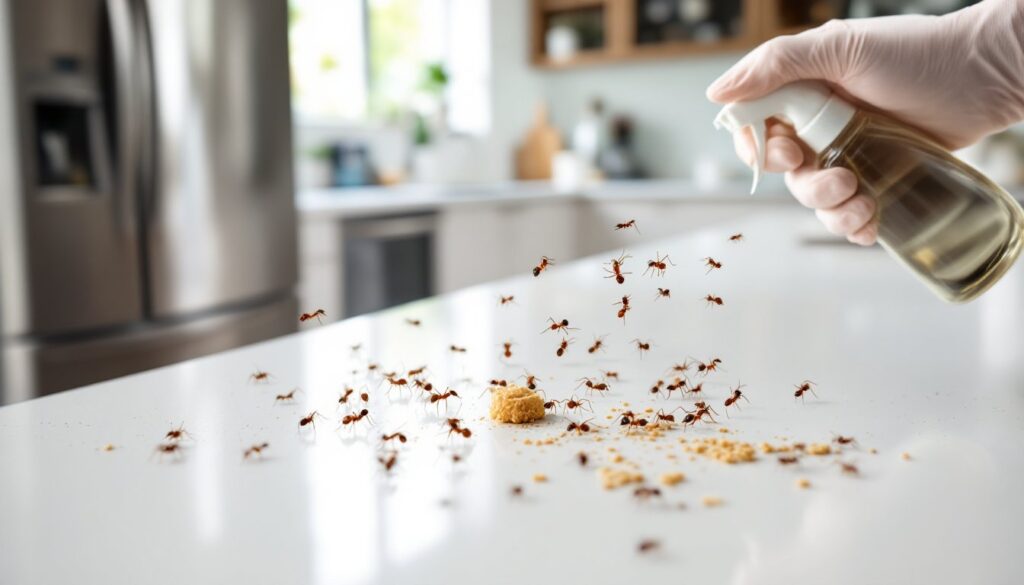
- Erratic indoor trails: Ants moving in chaotic, unpredictable paths across floors, walls, and counters, not the organized highways typical of other species.
- Large numbers in kitchens and bathrooms: Hundreds or thousands of ants swarming around sinks, tubs, pet bowls, or trash cans.
- Electrical malfunctions: Flickering lights, tripped breakers, or appliances shorting out. Crazy ants nest inside electrical boxes, which can create fire hazards.
- Activity around potted plants or mulch: Colonies frequently nest in soil or organic debris close to the home’s foundation.
- No visible mounds: Unlike fire ants, crazy ants don’t build noticeable mounds outdoors.
If a homeowner opens an electrical outlet cover and finds ants clustered inside, that’s a red flag. Many <a href="https://myglengarry.com/certified-pest-control/”>certified pest control professionals report electrical equipment as the single most common nesting site indoors. For safety reasons, electrical issues require immediate attention, both to resolve the infestation and to prevent electrical fires.
Crazy ants also emit a faint, musty odor when crushed, though it’s less pungent than the scent from odorous house ants. Spotting dead ants near baseboards or behind appliances often signals an active colony nearby.
DIY Crazy Ant Control Methods That Actually Work
Eliminating crazy ants requires persistence because colonies are huge and queens are numerous. Standard ant baits often fail because crazy ants prefer protein-based foods over sugar baits, and they don’t recruit nestmates to bait stations the way other species do.
Start with sanitation and exclusion:
- Seal entry points: Caulk cracks around windows, doors, plumbing penetrations, and foundation gaps. Use polyurethane or silicone caulk for flexibility.
- Remove food sources: Store pantry items in airtight containers, wipe down counters nightly, and empty trash daily.
- Eliminate moisture: Fix leaky faucets, improve ventilation in crawl spaces, and redirect downspouts away from the foundation.
- Trim vegetation: Keep shrubs, tree branches, and mulch at least 12 inches from the home’s exterior to eliminate bridges for foraging ants.
Tools and materials needed:
- Caulk gun and exterior-grade caulk
- Shop vacuum (for immediate removal of visible ants)
- Spray bottle
- Protective gloves and safety glasses
Natural and Chemical Treatment Options
Natural methods:
- Diatomaceous earth (DE): Food-grade DE can be dusted into wall voids, along baseboards, and around entry points. It damages the ants’ exoskeletons, causing dehydration. Wear a dust mask during application, as inhaling DE irritates lungs.
- Soapy water spray: Mix 1 tablespoon dish soap per cup of water. Spray directly on ants to break down their protective coating. This kills on contact but doesn’t address the colony.
- Vinegar barriers: A 50/50 mix of white vinegar and water disrupts scent trails temporarily. It’s not a long-term solution.
Chemical treatments:
- Non-repellent liquid insecticides: Products containing fipronil or indoxacarb work well because ants transfer the active ingredient back to the colony before dying. Apply as a perimeter treatment around the foundation, following label instructions for dilution rates (typically 0.5–1 oz per gallon of water).
- Gel baits with protein content: Look for baits containing hydramethylnon or fipronil. Place small dots near ant trails, but don’t expect instant results, it takes days for colony impact.
- Granular insecticides: Broadcast bifenthrin or lambda-cyhalothrin granules in a 5- to 10-foot band around the home’s exterior. Water lightly after application to activate.
Safety note: Always wear nitrile gloves and safety glasses when handling pesticides. Keep children and pets away from treated areas until dry. Read and follow EPA-registered product labels, they’re legally binding instructions, not suggestions.
Homes with electrical infestations need caution: spraying liquids into outlets or panels creates shock hazards. Turn off power at the breaker, remove cover plates, vacuum out dead ants, and use dust formulations like boric acid or silica gel instead of liquids. For extensive electrical nesting, professional treatment is safer.
A shop vacuum works wonders for immediate removal of visible ants, just empty the canister into a sealed bag and dispose of it outside. This won’t solve the problem, but it reduces the overwhelming numbers while treatments take effect. Homeowners dealing with persistent issues can explore additional ant control costs to compare DIY versus professional options.
How to Prevent Crazy Ants from Returning
Once eliminated, keeping crazy ants out requires ongoing maintenance. These aren’t one-and-done pests, they’ll return if conditions remain favorable.
Exterior prevention:
- Maintain a barrier: Reapply granular insecticide every 60–90 days during warm months. Rain and irrigation degrade effectiveness.
- Landscape management: Replace mulch with gravel or rock in a 12-inch band against the foundation. Mulch retains moisture and harbors nesting sites.
- Tree and shrub trimming: Keep branches from touching the roof or siding. Ants use these as highways.
- Firewood storage: Stack firewood on a rack at least 20 feet from the house. Inspect loads before bringing wood indoors.
Interior prevention:
- Seal penetrations: Check around pipes, wires, and HVAC lines where they enter the home. Expanding foam works for larger gaps: caulk handles smaller cracks.
- Pet food management: Don’t leave pet bowls out overnight. Wash and dry them after each feeding.
- Regular inspections: Monthly checks of crawl spaces, attics, and electrical panels catch new activity early.
If a homeowner has fruit trees or vegetable gardens, harvest produce promptly and clear fallen fruit daily. Rotting fruit attracts crazy ants in huge numbers. Some find that professional services offering comprehensive pest solutions provide quarterly treatments that keep multiple pest species in check year-round.
Consider installing door sweeps on exterior doors, aim for a gap of no more than 1/4 inch under closed doors. Check weatherstripping around garage doors and replace worn sections.
When to Call a Professional Exterminator
Some infestations exceed DIY capabilities. Call a licensed pest control professional if:
- Colonies are nesting in electrical systems. Electrical fires and shock hazards require expert handling.
- DIY treatments fail after 4–6 weeks. Crazy ant colonies are massive: incomplete treatment just causes them to relocate.
- Multiple satellite colonies exist. If ants reappear in different rooms or exterior areas, the infestation likely involves several interconnected nests.
- The home has structural vulnerabilities. Crawl space moisture, damaged soffits, or extensive foundation cracks need remediation beyond pesticide application.
- Local regulations require licensed applicators. Some states restrict certain insecticides to certified professionals.
Professionals use commercial-grade products unavailable to consumers and can apply treatments in areas homeowners can’t safely reach. They’ll also identify conducive conditions, like plumbing leaks inside walls or inadequate attic ventilation, that contribute to repeated infestations.
Expect to pay $150–$400 for an initial treatment, with quarterly follow-ups around $75–$150 per visit. Costs vary by region, property size, and infestation severity. Some companies include warranty periods: if ants return within 30–90 days, they’ll re-treat at no charge.
Before hiring, verify the company holds a valid pest control license (requirements vary by state) and ask about their specific experience with crazy ants. Not all exterminators know how to handle these pests effectively, methods that work on Argentine or carpenter ants often fail here. Reading pest control reviews from other homeowners can help identify companies with proven crazy ant expertise.
Conclusion
Crazy ant infestations test patience and persistence, but they’re not invincible. Combining sanitation, exclusion, targeted treatments, and ongoing prevention gives homeowners the upper hand. Whether tackling the problem solo or bringing in professional help, the key is understanding crazy ant behavior and acting before colonies grow into the millions. With the right approach, a home can return to being ant-free, and stay that way.