Table of Contents
ToggleAustin homeowners know the drill: scorching summers bring more than just high electric bills, they bring pests. From fire ants colonizing driveways to scorpions sneaking into garages, critter control isn’t optional in Central Texas. But what does professional pest control actually cost in 2026? Prices vary widely based on pest type, service frequency, and property size. This guide breaks down real-world pricing, compares DIY versus professional approaches, and shows where homeowners can trim costs without sacrificing results.
Key Takeaways
- Austin pest control prices range from $100–$300 for one-time treatments and $300–$500 annually for quarterly service plans, with costs varying based on pest type and property size.
- Termites are the most expensive pest to treat in Austin, costing $1,200–$3,500 for professional barrier or bait station systems, making preventive quarterly plans far more cost-effective than reactive treatments.
- DIY pest control saves initial costs ($100–$200 for equipment) but lacks commercial-grade products and expertise; professional services are essential for termites, bed bugs, and structural issues.
- You can reduce Austin pest control costs 10–20% by bundling services, prepaying annually, comparing multiple quotes, and scheduling treatments during winter months when demand is lowest.
- Regular preventive pest control maintenance costs significantly less than emergency treatments—homes with quarterly service plans spend 60% less on pest-related repairs over five years compared to reactive-only approaches.
Average Cost of Pest Control Services in Austin
Austin pest control pricing reflects both local pest pressures and the competitive service market. Understanding baseline costs helps homeowners budget appropriately and spot inflated quotes.
One-Time Treatment Costs
One-time visits typically run $100 to $300 depending on property size and pest severity. A standard 1,500-square-foot home with moderate ant or roach issues usually falls in the $125 to $175 range. Scorpion treatments jump to $200 to $400 due to specialized application methods and follow-up inspections.
Initial inspections are often free with treatment, but standalone diagnostic visits cost $50 to $100. Expect higher fees for multi-story homes or properties exceeding 3,000 square feet, many companies charge an additional $25 to $50 per 1,000 square feet beyond base pricing.
Emergency same-day service carries a premium, adding $75 to $150 to standard rates. If you’re dealing with stinging insects near entryways or rodents in living spaces, that upcharge might be worth it.
Monthly and Quarterly Service Plans
Recurring service plans deliver better long-term value than one-off treatments in Austin’s pest-friendly climate. Monthly plans average $50 to $80 per visit with initial setup fees of $100 to $200 for comprehensive baseline treatment.
Quarterly plans, the most popular option, run $75 to $125 per service, totaling $300 to $500 annually. These typically include exterior barrier treatments, perimeter sprays, and web removal. Many providers throw in free re-treatments if pests return between scheduled visits.
Annual contracts often knock 10% to 15% off total costs compared to pay-per-visit pricing. Some companies require 12-month commitments while others operate month-to-month. Read the cancellation terms, early termination fees range from $50 to one month’s service cost.
Price Breakdown by Common Austin Pests
Different pests demand different approaches, and pricing reflects treatment complexity.
Fire ants: Mound treatments run $5 to $20 per mound for individual spot treatment. Full-yard broadcast applications cost $75 to $150 for average lots (7,000 to 10,000 square feet). Baiting programs with scheduled reapplication run $40 to $65 per quarterly visit.
Termites: This is where costs escalate significantly. Liquid barrier treatments average $1,200 to $2,500 for typical Austin homes, requiring trenching and soil treatment around the entire foundation perimeter. Bait station systems run $1,500 to $3,500 upfront with $300 to $500 annual monitoring fees. Spot treatments for localized activity start around $200 to $400 but rarely solve widespread infestations.
Scorpions: Specialized UV light inspections and crevice treatments cost $250 to $500 initially, with quarterly maintenance running $100 to $150. Blacklight follow-ups help identify harborage areas, but they’re labor-intensive.
Rodents: Trap-and-seal programs range from $200 to $600 depending on entry point quantity and attic cleanup needs. Exclusion work, sealing gaps, installing vent screens, adds $300 to $800 but prevents recurring issues. Simple snap-trap placement with weekly monitoring runs $150 to $300 for the first month.
Mosquitoes: Seasonal control programs (April through October) cost $75 to $125 per monthly treatment for quarter-acre lots. Misting systems start around $2,000 installed with $30 to $60 monthly refill costs.
Factors That Affect Pest Control Pricing in Austin
Several variables push costs up or down, and knowing them helps homeowners negotiate or set realistic expectations.
Property size and access: Larger lots mean more perimeter to treat. Homes backing to greenbelt areas or creeks face higher pest pressure and often require additional barrier treatments. Difficult access, steep slopes, dense landscaping, or fenced yards without gates wide enough for equipment, can add $25 to $75 per visit.
Infestation severity: Light preventive treatment costs substantially less than active infestations requiring multiple applications. Heavy German roach infestations might need three to five treatments over eight weeks instead of a single visit.
Treatment method: Organic or low-toxicity products typically cost 15% to 30% more than conventional synthetic treatments. Integrated Pest Management (IPM) approaches combining mechanical, biological, and chemical controls require more labor but reduce repeat applications.
Service guarantees: Companies offering 60- or 90-day warranties with free re-treatments charge slightly more upfront but provide better value if pests return. Read the fine print, some guarantees exclude specific pests or require homeowners to complete certain sanitation steps.
Seasonal demand: Prices can climb 10% to 20% during peak summer months (June through August) when call volume spikes. Scheduling preventive treatments in early spring often yields better availability and negotiating room.
DIY Pest Control vs. Professional Services: Cost Comparison
DIY approaches work for mild, preventive scenarios but have clear limitations.
DIY material costs: A quality pump sprayer runs $30 to $80. Concentrated insecticides like bifenthrin or permethrin cost $30 to $60 per bottle, covering 3,000 to 6,000 square feet depending on dilution rates. Granular baits for ants or roaches run $15 to $40 per container. Budget $100 to $200 for initial equipment and chemicals, then $40 to $80 for annual replenishment.
Time investment: Perimeter treatments take 60 to 90 minutes for thorough application around a typical home’s foundation, eaves, and entry points. You’ll need to repeat quarterly for consistent protection, that’s four to six hours annually not counting prep time, mixing, or cleanup.
Knowledge gap: Identifying pest species, understanding chemical labels, and applying treatments at proper concentrations and locations requires research. Misapplication wastes product and money. Many pest control strategies require understanding pest biology, when insects feed, where they nest, and what disrupts their lifecycle.
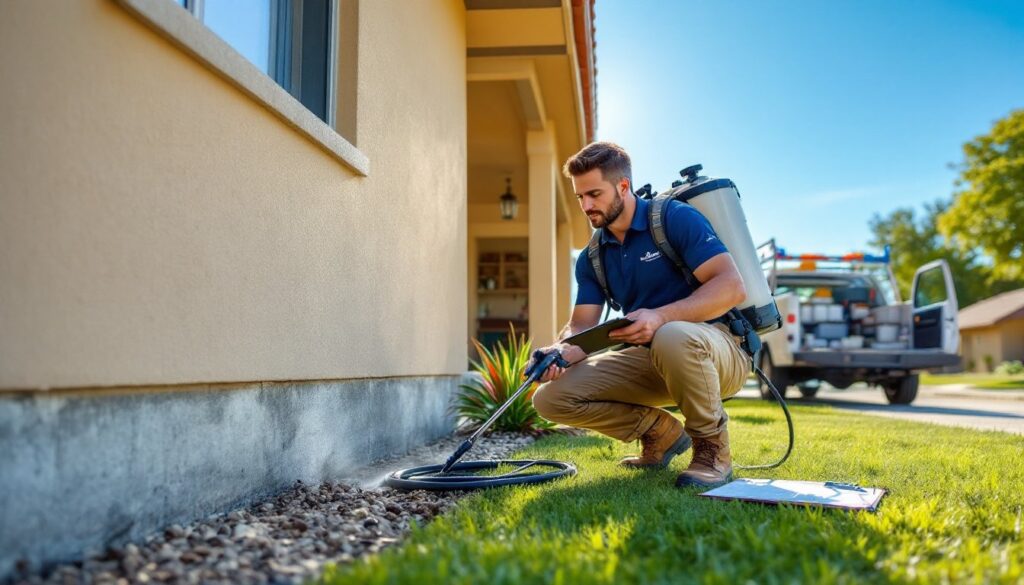
Professional advantages: Licensed technicians carry commercial-grade products unavailable to consumers, often with longer residual effectiveness. They access hard-to-reach areas like attic voids, crawl spaces, and wall cavities. Most importantly, pros diagnose underlying issues, moisture problems attracting roaches, structural gaps letting in rodents, or conducive conditions breeding mosquitoes.
When to DIY: Preventive perimeter sprays, fire ant mound spot-treatment, and basic mosquito larvicide applications are manageable for homeowners comfortable following label directions and safety protocols. Wear long sleeves, chemical-resistant gloves, and safety glasses when applying any pesticide.
When to call professionals: Termites, bed bugs, significant scorpion presence, or any situation requiring structural repairs or attic remediation. These scenarios exceed DIY capabilities and risk property damage or health hazards if handled incorrectly.
How to Save Money on Austin Pest Control
Smart shopping and strategic timing reduce pest control expenses without cutting corners.
Bundle services: Many companies discount combined treatments. If you need both mosquito control and general pest service, bundling saves $20 to $40 per visit compared to separate scheduling.
Neighborhood programs: Some providers offer group discounts when multiple homes on the same street sign up. Savings run 10% to 20% off standard rates since technicians minimize drive time.
Prepay annually: Paying for a full year upfront often earns one free treatment or 15% to 20% off total cost. Check if your provider offers this, it typically saves $75 to $150 compared to quarterly billing.
Handle prep work yourself: Companies charge for moving stored items in garages, trimming vegetation away from foundations, or clearing debris. Doing this prep work before the technician arrives can shave $50 to $100 off treatment costs. According to data from cost estimator resources, homeowner preparation reduces service time by an average of 30%.
Maintain preventive treatments: Letting infestations develop costs far more than consistent quarterly service. A $400 annual prevention plan beats a $1,200 termite treatment or $500 rodent exclusion project. Industry research shows that homes with regular professional pest management spend 60% less on pest-related repairs over five years compared to reactive-only approaches.
Reduce conducive conditions: Fix leaking faucets, seal food in airtight containers, repair torn window screens, and keep firewood away from the house. These steps don’t cost much but significantly reduce pest attractants. Studies on home maintenance impact demonstrate that addressing moisture issues alone cuts roach and silverfish activity by up to 80%.
Compare multiple quotes: Get at least three estimates. Pricing varies considerably, often 20% to 35%, between companies for identical services. Ask what’s included: initial treatment, follow-ups, guarantees, and pest coverage specifics.
Ask about military, senior, or new-customer discounts: Many Austin providers offer $25 to $50 off initial service or 10% ongoing discounts for veterans, seniors, or referrals. Always ask before booking.
Timing matters: Schedule non-urgent treatments during winter months (December through February) when demand drops and companies run promotions. Some offer free initial inspections or waive setup fees during slow periods.