Table of Contents
ToggleBees in the garden are one thing, bees building a hive inside your wall cavity or under your porch overhang are another. Most homeowners want to support pollinators, but a nest in the wrong spot creates real safety concerns, especially for families with young kids or anyone with allergies. The good news? You don’t have to choose between protecting your home and protecting bees. With the right approach, you can address the problem humanely, and in many cases, that means relocating, not exterminating, the colony. This guide walks through identification, safe DIY deterrents, and when it’s time to call in professional bee pest <a href="https://myglengarry.com/pest-control-melbourne-fl/”>control services.
Key Takeaways
- Accurate bee identification is crucial since honeybees, bumblebees, carpenter bees, and wasps require different bee pest control approaches and carry varying safety risks.
- Seal entry points smaller than ⅛ inch using exterior-grade caulk, remove water sources, and install hardware cloth barriers over vents to prevent bees from nesting in walls and eaves.
- Call a professional bee pest control service immediately if hives are inside walls, attics, or near high-traffic areas, as live removal saves the colony while eliminating structural damage and safety hazards.
- Natural deterrents like peppermint oil and fake wasp nests work only on scouting bees before colonies establish; established hives require professional removal or treatment.
- Support pollinators while protecting your home by planting native flowers 15–20 feet away, providing bee hotels, painting wooden structures, and conducting annual spring inspections.
- Many local beekeepers offer free honeybee swarm removal, making humane relocation an affordable alternative to extermination that preserves essential pollinator populations.
Understanding When Bees Become a Problem
Bees aren’t automatically a pest. A hive tucked into a hollow tree 50 feet from your back door isn’t a threat. But when a swarm decides your eaves, attic vent, or water meter box is prime real estate, you’ve got a structural and safety issue.
The first concern is access points. Honeybees and bumblebees can squeeze through gaps as small as ⅛ inch, the width of a pencil. Once they’re inside a wall void or soffit, the colony grows fast. A mature honeybee hive can house 30,000 to 60,000 bees and produce pounds of honeycomb. If that comb melts in summer heat or gets exposed during removal, you’ll deal with honey seepage, which attracts ants, roaches, and rodents.
Allergies are the second factor. According to the CDC, roughly 3% of adults and 1% of children experience severe allergic reactions to bee stings. Even for non-allergic individuals, multiple stings from a defensive colony near a high-traffic entry point are dangerous.
Finally, there’s property damage. Carpenter bees, often confused with bumblebees, bore ½-inch diameter tunnels into untreated wood siding, fascia, and deck posts. While they don’t eat the wood, repeated tunneling weakens structural members over time, and woodpeckers often follow to feed on larvae, causing further damage.
Identifying the Type of Bee on Your Property
Not all buzzing insects are bees, and not all bees behave the same way. Accurate identification determines your next move.
Honeybees are ½ to ⅝ inch long, fuzzy, amber-orange with dark brown bands. They’re social, forming large perennial colonies. If you see dozens flying in and out of a single crack, it’s likely honeybees. They’re generally docile unless the hive is threatened, but they will defend aggressively if you’re mowing near the entrance or trimming shrubs too close.
Bumblebees are larger and rounder, about ¾ to 1 inch, with a thick coat of black and yellow fuzz. They nest underground or in abandoned rodent burrows, rarely in structures. Colonies are small, 50 to 400 individuals, and typically die off in late fall. They’re incredibly gentle unless you step directly on the nest.
Carpenter bees look like bumblebees but have a shiny, hairless black abdomen. Males hover and buzz aggressively but can’t sting: females can sting but rarely do. Carpenter bees are solitary, though they’ll return to the same nesting sites year after year. Look for perfectly round ½-inch holes with sawdust piles below.
Yellow jackets and paper wasps are often mistaken for bees, but they’re wasps, smooth-bodied, narrow-waisted, and more aggressive. Wasps are carnivorous scavengers, not pollinators in the same sense. Approaches for dealing with wasp management differ significantly from true bee species, so ID matters.
If you’re unsure, snap a clear photo and consult your local extension office or a beekeeper. Many will ID for free.
Safe DIY Bee Deterrent Methods for Homeowners
If the hive isn’t inside your walls yet and you want to discourage bees from setting up shop, a few low-impact tactics can help. These work best in spring when scout bees are scouting, not after a colony is established.
Seal entry points. Walk your home’s exterior and caulk cracks, gaps around vents, and holes in soffits using paintable exterior-grade caulk or expanding foam for gaps larger than ¼ inch. Pay special attention to areas where dissimilar materials meet, siding and brick, trim and stucco.
Remove attractants. Bees need water. Fix dripping hose bibs, clear clogged gutters, and eliminate standing water in plant saucers. If you have a birdbath, move it at least 20 feet from the house.
Install physical barriers. For eaves and overhangs, ¼-inch hardware cloth stapled or screwed over vent openings will block bees while maintaining airflow. This is especially useful for attic gable vents and crawlspace vents.
Natural Repellents and Prevention Strategies
Natural repellents won’t evict an established hive, but they can discourage scouts. Be realistic: if a colony is already present, these won’t work.
Peppermint oil is a common recommendation. Mix 10 to 15 drops of pure peppermint essential oil with 1 cup of water in a spray bottle and apply to areas where bees are exploring, door frames, windowsills, deck railings. Reapply after rain. It’s mildly effective against carpenter bees and solitary species, less so against social colonies.
Citrus peels and cucumber slices are often cited online but have limited real-world success. If you want to try them, place fresh peels near trouble spots and replace every few days. Don’t expect miracles.
Fake wasp nests (paper lanterns shaped like hives) work on the theory that bees avoid areas occupied by competitors. Anecdotal reports are mixed. They cost under $10, so they’re worth testing if you’re dealing with early-season scouting.
Avoid pesticides. Most consumer insecticides are broad-spectrum and kill beneficial insects. Spraying a live honeybee hive also makes the colony defensive and can spread toxins into the comb, which later contaminates the honey, a problem if you’re trying to have the hive relocated. For aggressive species like yellow jackets, chemical control may be warranted, but true bees deserve better options first.
When to Call a Professional Bee Removal Service
Some situations are DIY-appropriate. Others aren’t. Here’s when to pick up the phone.
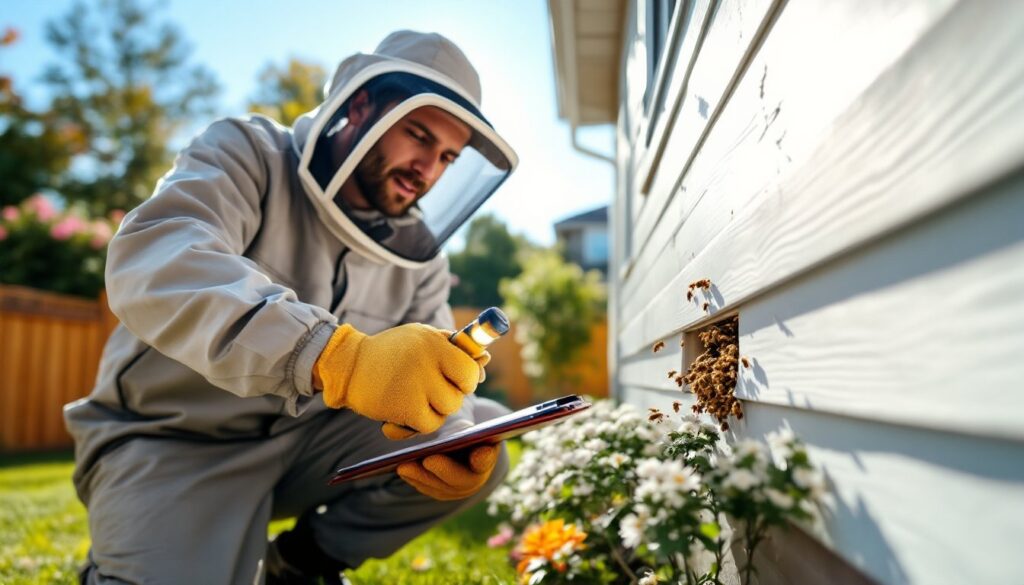
The hive is inside your walls, attic, or floor joists. Removing an established colony requires cutting into drywall or siding, extracting comb, vacuuming live bees, and sanitizing the cavity. If you skip the comb, you’ll get secondary pest problems and possible structural damage from melting honey.
Many regions have certified pest control companies trained in live removal, which involves relocating the queen and colony to an apiary rather than exterminating them. Live bee removal is increasingly available through local beekeepers or specialized services. Expect to pay $200 to $600 depending on hive size and accessibility, but that includes repair and prevention.
You’re allergic or multiple people have been stung. Don’t gamble. Professional removal eliminates the risk and is often faster than DIY trial-and-error.
The hive is in a high-traffic area, near a front door, playground, or garage entrance. Even a docile colony becomes defensive if bumped repeatedly. Relocation makes sense.
You’ve tried deterrents and the bees are back. Carpenter bees, in particular, return to the same nesting sites unless you treat the tunnels and seal them with wood filler or dowels. A pro can treat with residual dust (like boric acid or diatomaceous earth) and plug holes correctly.
State or local regulations apply. Some jurisdictions require licensed applicators for any pesticide use, even on your own property. Check with your county extension office.
When searching for bee pest control near me or bee pest control services, ask if they offer live removal and if they’re experienced with your specific bee type. Beekeepers often do free honeybee removal if the hive is accessible. Pest control companies typically charge but handle species beekeepers won’t touch, like carpenter bees or Africanized honeybees.
Protecting Your Home While Supporting Pollinators
You can bee-proof your house without turning your yard into a pollinator desert. It’s about creating boundaries, not eliminating habitat.
Maintain a pollinator garden away from the house. Plant native perennials like black-eyed Susan, coneflower, and milkweed in beds at least 15 to 20 feet from doors and windows. Bees will forage there instead of exploring your siding.
Provide alternative nesting sites. Bee hotels, blocks of wood drilled with 3/16- to 5/16-inch holes, give solitary bees a place to lay eggs. Mount them 3 to 5 feet off the ground in a sunny, dry spot. These won’t attract honeybees, which need larger cavities, but they support mason bees and leafcutter bees.
Use untreated wood for garden structures. Carpenter bees avoid painted or stained wood. Applying two coats of exterior paint or semi-transparent stain to exposed wood surfaces, pergolas, arbors, deck railings, discourages tunneling. If you’ve got untreated posts or beams, pressure-treated lumber or naturally rot-resistant species like cedar and redwood are less attractive to carpenter bees.
Annual inspections. Walk your property each spring. Look for fresh sawdust piles, new holes, or increased bee activity near eaves and vents. Catching a problem early, before the colony moves in, makes a huge difference.
Support local beekeepers. Many hobbyist and commercial beekeepers maintain swarm removal lists and will come retrieve a honeybee swarm for free. Swarms are docile (they’ve just left the hive and are full of honey, not defensive), and removal usually takes under an hour. Keep a local beekeeper’s number saved.
If you’re planning home repairs and want more guidance on pest-proofing, resources like HomeAdvisor offer cost estimates and contractor matching. For product reviews on caulk, sealants, and outdoor finishes, Good Housekeeping provides tested recommendations.
Conclusion
Dealing with bees near your home doesn’t have to be a scorched-earth scenario. By identifying the species, understanding the risks, and choosing humane removal methods, homeowners can protect both their property and the pollinators that keep gardens productive. When in doubt, call a professional pest control service or local beekeeper, especially for in-wall colonies or high-risk situations. With a little prevention and the right help, you can keep your home safe and your yard buzzing in all the right places.