Table of Contents
ToggleFleas don’t just bite, they multiply fast, hide everywhere, and outlast most DIY efforts. A single breeding pair can produce thousands of offspring in weeks, turning a minor problem into a full-blown infestation. If you’ve vacuumed, sprayed, and washed everything twice but still find yourself scratching, it’s time to ask whether professional pest control can actually solve the problem. The short answer: yes, but success depends on the treatment method, your prep work, and follow-through. Here’s what homeowners need to know about hiring pros to eliminate fleas for good.
Key Takeaways
- Professional pest control achieves a 95% success rate by targeting fleas at every life stage with insect growth regulators and adulticides, while DIY methods often fail because they miss eggs and pupae.
- A typical flea treatment costs $150–$300 for initial service plus $75–$150 for follow-up visits, which is cost-effective compared to multiple rounds of ineffective DIY products.
- Proper home preparation—vacuuming, washing pet bedding in hot water, and clearing floors—doubles the effectiveness of pest control treatments and is critical for success.
- Professional pest control uses commercial-grade chemicals with higher active ingredient concentrations and specialized equipment like backpack sprayers and foggers that DIY products cannot match.
- Preventing reinfestation requires year-round veterinarian-approved pet flea preventatives, regular vacuuming twice weekly, and yard maintenance to eliminate outdoor flea harborage areas.
- If fleas persist beyond two weeks or appear in multiple rooms, professional intervention becomes necessary as fleas reproduce faster than consumer products can eliminate them.
How Professional Pest Control Eliminates Flea Infestations
Pest control companies use a multi-stage approach that targets fleas at every life stage, eggs, larvae, pupae, and adults. This is critical because DIY treatments often miss the pupae stage, which can lie dormant in carpets and baseboards for months.
Most pros start with an insect growth regulator (IGR). IGRs disrupt the flea’s development cycle, preventing eggs and larvae from maturing into biting adults. They’re typically applied as a spray or fog and remain active for several months. Common active ingredients include methoprene and pyriproxyfen, both of which are low-toxicity for mammals but highly effective on insects.
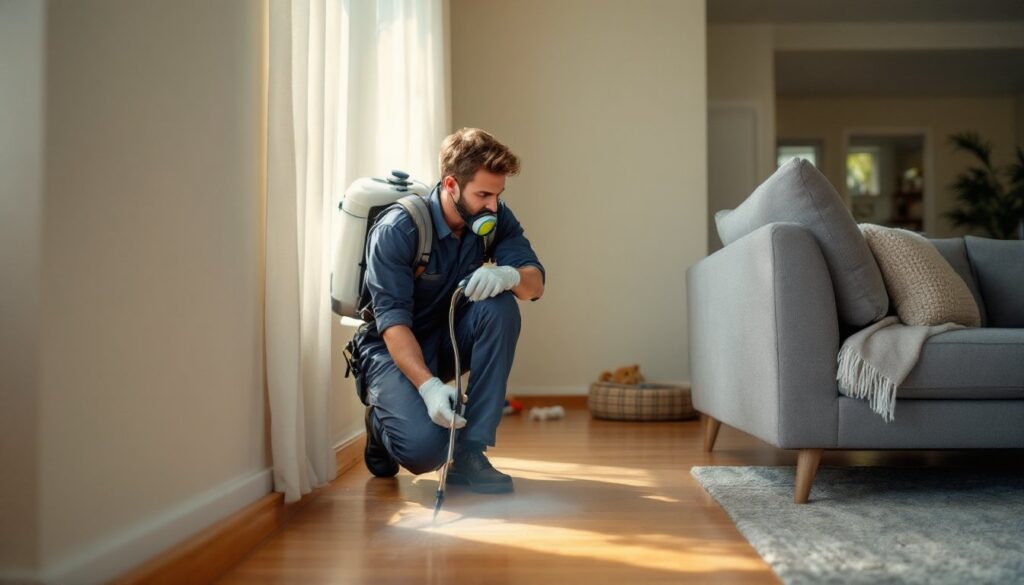
Next comes an adulticide, usually a synthetic pyrethroid or a botanical pyrethrin. These knock down adult fleas on contact. Professionals apply adulticidal treatments to baseboards, carpet edges, pet bedding areas, under furniture, and along thresholds, anywhere fleas congregate or travel. Some companies use microencapsulated formulations, which release the active ingredient slowly over weeks, extending the treatment’s effectiveness.
For severe infestations, technicians may use a combination of fogging and targeted spraying. Foggers distribute fine particles throughout a room, reaching cracks and hidden spaces. But, fogging alone won’t penetrate deep into carpets or upholstery, so it’s paired with liquid applications. Professionals using certified pest control methods often inspect for secondary pest issues during flea treatments, since infestations can attract other insects.
If you have pets, the technician will likely recommend treating them simultaneously with veterinary-approved flea control products. Fleas can reinfest from untreated animals within hours, undoing professional work.
What to Expect During a Professional Flea Treatment
A typical flea treatment takes 1 to 2 hours for an average-sized home (1,500–2,000 square feet), though heavily infested properties or homes with multiple pets may require more time. Here’s the process:
Initial Inspection: The technician walks through your home, identifying hotspots where fleas are active. They’ll check pet resting areas, carpeted rooms, upholstered furniture, and cracks along baseboards. Expect questions about pet habits, recent flea activity, and any previous treatments you’ve tried.
Treatment Application: After the inspection, the tech applies IGRs and adulticides. They’ll spray baseboards, carpet perimeters, and under furniture. Pet bedding areas get extra attention. Some companies use backpack sprayers for precision: others use power sprayers for larger areas. Technicians wear respirators and gloves during application, take that as a cue to keep yourself and pets out of treated areas until surfaces dry.
Drying and Ventilation: Most treatments require 2 to 4 hours of drying time. You and your pets must vacate during application and drying. Open windows or run fans after the recommended wait time to speed ventilation. The chemical odor (often described as slightly solvent-like) typically dissipates within a few hours.
Follow-Up Visit: Many companies schedule a follow-up treatment 14 to 21 days after the initial service. This timing targets fleas that were in the pupal stage during the first visit and have since emerged as adults. The second treatment is usually lighter and faster since the infestation is already weakened. Similar approaches are used by pest control services in Melbourne, FL where humidity accelerates flea breeding cycles.
Technicians should leave written instructions covering vacuuming schedules, pet re-entry times, and what to do if you see live fleas (which is normal for a few days post-treatment).
How Effective Is Pest Control for Fleas Compared to DIY Methods?
Professional pest control has a success rate above 95% when homeowners follow prep and aftercare instructions. DIY methods, by contrast, often fail because they miss eggs and pupae or use products in insufficient concentrations.
Why Pros Win:
- Commercial-grade chemicals: Pros use products with higher active ingredient concentrations than retail formulas. A professional pyrethroid spray might contain 0.5% active ingredient, while a consumer aerosol tops out at 0.1%.
- Proper coverage: Technicians know where fleas hide. DIYers often over-treat visible areas and under-treat cracks, edges, and voids.
- IGR access: Most hardware store flea sprays lack insect growth regulators. Without IGRs, you’re only killing adults while eggs and larvae mature into the next generation.
- Equipment: Backpack sprayers and foggers deliver a finer, more even mist than pump bottles or aerosol cans.
When DIY Works:
Light infestations caught early, say, a few fleas brought in by a pet after a walk, can sometimes be managed with thorough vacuuming, washing pet bedding in hot water (130°F or hotter), and treating pets with veterinarian-recommended flea control. High-heat drying cycles help kill fleas in fabrics, as temperatures above 95°F are lethal to all life stages.
When DIY Fails:
If you’ve been fighting fleas for more than two weeks, see them in multiple rooms, or have multiple pets, DIY efforts rarely succeed. Fleas reproduce faster than you can kill them with consumer products. Professional intervention becomes cost-effective when you factor in wasted money on retail sprays, foggers, and shampoos.
Cost of Professional Flea Pest Control Services
Expect to pay $150 to $300 for an initial flea treatment in a typical single-family home (1,200–2,000 square feet). Costs vary by region, infestation severity, and whether follow-up visits are included.
Pricing Breakdown:
- Initial treatment: $150–$300 (includes inspection, application of IGRs and adulticides, and written aftercare instructions)
- Follow-up visit: $75–$150 (second application 2–3 weeks later)
- Severe infestations: Add $50–$100 for extra rooms, heavy furniture moving, or additional product
- Quarterly prevention plans: $50–$75 per visit when bundled with general pest control
Larger homes, properties with multiple stories, or homes with extensive carpeting and upholstery will be on the higher end. Companies in urban areas or regions with high demand (like the Southeast, where humidity fuels flea populations) may charge more.
What’s Included:
Most companies provide a 30-day warranty on flea treatments. If fleas persist after the follow-up visit, they’ll re-treat at no charge. Ask about this before signing, it’s standard in the industry. Some companies offer package deals that combine flea treatment with tick pest control or other services.
Cost Comparison:
DIY flea control products (sprays, foggers, powders) typically run $30–$80 per round. If you need three or four treatments over several weeks, plus multiple rounds of pet treatments, you’re approaching professional pricing without the same effectiveness. Factor in your time, too: a full DIY treatment cycle involves hours of vacuuming, washing, and reapplying products.
How to Prepare Your Home Before Pest Control Arrives
Proper prep doubles the effectiveness of professional flea treatment. Skipping these steps is the most common reason treatments underperform.
Pre-Treatment Checklist:
-
Vacuum thoroughly. Hit all carpets, rugs, upholstery, and baseboards. Vacuuming removes flea eggs and larvae and stimulates pupae to emerge (making them vulnerable to treatment). Seal and discard the vacuum bag or empty the canister into an outdoor trash bin immediately.
-
Wash all pet bedding, throw blankets, and removable fabric items. Use hot water (130°F minimum) and high-heat drying. This kills eggs, larvae, and adults on contact.
-
Clear floors and furniture. Move toys, clutter, and small furniture off carpets and away from baseboards. The more floor area the technician can access, the better the coverage.
-
Remove pets and people. All occupants, including fish tanks (cover and turn off air pumps) and caged pets, must leave during treatment and for the drying period (usually 2–4 hours). Fleas don’t infest aquariums, but aerosols can harm aquatic life.
-
Mop hard floors lightly. A quick mop removes dust and debris that can interfere with product adhesion. Let floors dry before the tech arrives.
-
Communicate pet treatment status. Let the technician know when pets were last treated with flea medication. They may recommend delaying the home treatment if pet products were just applied, to avoid overexposure.
Don’t:
- Clean or vacuum for 48 hours after treatment. You’ll remove the residual product before it has time to work.
- Apply your own flea sprays within a week of professional service. Mixing products can reduce effectiveness or create safety concerns.
- Assume the technician will move heavy furniture. If you want treatment under beds, sofas, or dressers, move them beforehand or ask about upcharges.
Preventing Fleas After Professional Treatment
Professional treatment eliminates existing infestations, but prevention keeps fleas from returning. Fleas hitch rides on pets, wildlife, and even your pant cuffs.
Ongoing Pet Protection:
Treat pets year-round with veterinarian-recommended flea preventatives. Topical treatments (like fipronil or selamectin) or oral medications (like nitenpyram or spinosad) kill fleas before they can reproduce. Don’t rely on flea collars alone, they’re less effective than topical or oral products.
Yard Maintenance:
Fleas thrive in shaded, humid areas where wildlife rests. Trim back bushes and tall grass near the house. Consider treating outdoor areas where pets spend time. Granular or spray yard treatments containing pyrethroids or natural options like cedar oil can reduce outdoor flea populations. Some spider pest control methods also address outdoor harborage areas that attract multiple pest types.
Vacuum Regularly:
Vacuum carpets, rugs, and upholstery at least twice a week. This removes flea eggs and larvae before they develop. Discard the vacuum bag or empty the canister outside immediately, live fleas can escape and reinfest.
Wash Pet Bedding Weekly:
Hot water and high-heat drying remain your best defense. If your pet sleeps on your furniture, wash throw blankets and slipcovers on the same schedule.
Limit Wildlife Access:
Seal gaps under decks, sheds, and porches where raccoons, opossums, or feral cats might nest. These animals are common flea carriers. Use hardware cloth (1/4-inch mesh) to block entry points, chicken wire has gaps too large to exclude small wildlife.
Monitor for Reinfestation:
Place a shallow dish of soapy water under a nightlight in rooms where you’ve seen fleas. Fleas are attracted to light and warmth: they’ll jump toward the light, land in the water, and drown. Check the dish daily. If you catch more than a couple of fleas within a week of treatment, contact your pest control company.
Conclusion
Professional pest control is the most reliable way to eliminate a flea infestation. With the right combination of IGRs, adulticides, and follow-up treatments, pros achieve success rates DIY methods can’t match. The key is preparation, vacuum, wash, and clear your space before the tech arrives, and follow-through after treatment. Pair professional service with consistent pet care and home maintenance, and you’ll keep fleas from coming back. If you’re still seeing fleas two weeks post-treatment, don’t wait. Call your pest control company. Most offer free re-treatments under warranty, and catching a resurgence early prevents another full-blown infestation.