Table of Contents
ToggleStore-bought bug sprays promise quick kills and long-lasting protection, but they often come with a side of harsh chemicals and a price tag that adds up fast. Homeowners looking for safer, budget-friendly alternatives are turning to homemade pest control sprays, and for good reason. With a few common household ingredients and the right mixing ratios, it’s possible to create effective pest deterrents that work on everything from ants marching across the counter to fruit flies circling the compost bin. These DIY formulas won’t always match the knockout power of commercial pesticides, but they offer a practical first line of defense that’s safer for kids, pets, and the environment.
Key Takeaways
- DIY pest control sprays offer cost savings, ingredient transparency, and reduced chemical exposure compared to store-bought alternatives, making them ideal for households with children and pets.
- A basic DIY pest control spray can be made with common household items like dish soap, white vinegar, essential oils, and water, costing just a few dollars versus $8–$15 for commercial sprays.
- While effective for minor infestations and light pest activity, DIY sprays work as repellents or contact killers and don’t provide long-lasting residual protection like professional treatments.
- Always test DIY sprays on inconspicuous areas first, wear protective gloves when handling concentrates, and keep bottles labeled and away from children and pets to ensure safe application.
- For persistent or heavy infestations of structural pests like termites, bedbugs, or roaches, professional pest control is necessary because home remedies cannot provide the targeted, lasting treatment these serious problems require.
- Combining DIY natural sprays with sanitation practices—sealing cracks, eliminating moisture, securing food storage, and removing standing water—creates an effective, balanced pest management approach.
Why Choose Homemade Pest Control Sprays Over Store-Bought Options
Homemade pest sprays offer three main advantages: cost savings, ingredient transparency, and reduced chemical exposure. A typical bottle of commercial insect spray runs $8 to $15 and might contain synthetic pyrethroids, neonicotinoids, or other active ingredients that require careful handling and storage. DIY versions, by contrast, use ingredients like dish soap, vinegar, and essential oils, items most homeowners already have in the pantry or can pick up for a few dollars.
Another draw is control over what goes into the bottle. Store-bought sprays list active ingredients but often bury the full formula under “inert ingredients” or proprietary blends. Homemade recipes let users skip the mystery additives, which matters for households with children, pets, or anyone with chemical sensitivities.
That said, DIY sprays have limits. They typically work as repellents or contact killers rather than residual insecticides, meaning they don’t leave a long-lasting barrier. For minor infestations, a few ants, the occasional spider, or seasonal gnats, they’re a solid option. For recurring or heavy infestations (termites, bedbugs, large roach populations), calling in certified pest control is the smarter move. Structural pests and wood-destroying insects often require targeted treatments and follow-up inspections that home remedies can’t provide.
Essential Ingredients for Effective DIY Pest Sprays
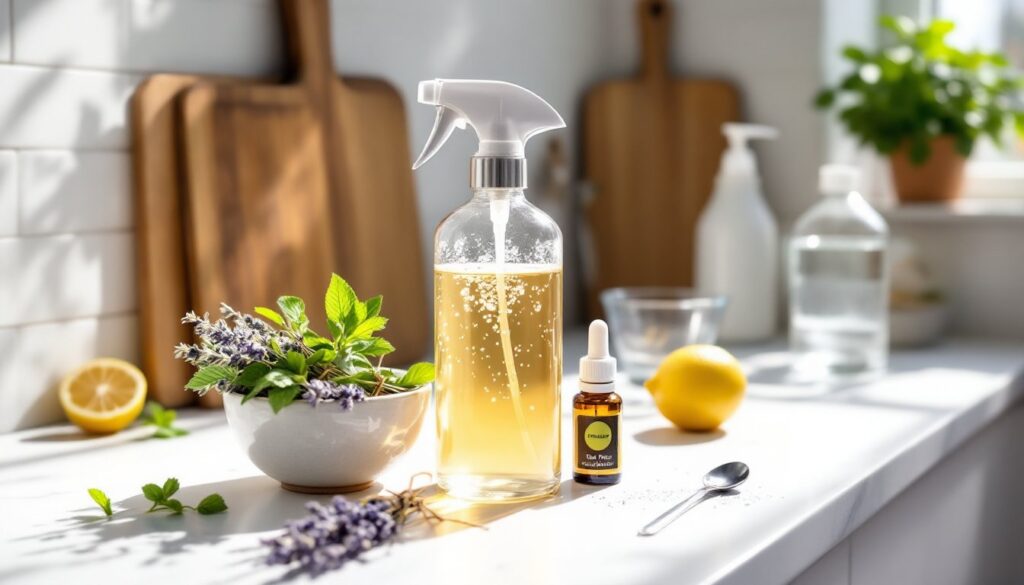
A well-stocked DIY pest control kit doesn’t require a shopping spree. Most effective formulas rely on a handful of core ingredients, each with a specific role:
- Water: The base for nearly every spray. Use distilled or filtered water to avoid mineral buildup in spray bottles.
- Dish soap (unscented, liquid): Acts as an emulsifier and surfactant, helping oils and water mix while also breaking down the waxy coating on insect exoskeletons. Use 1 to 2 teaspoons per quart of water.
- White vinegar (5% acidity): A mild acid that disrupts scent trails (helpful against ants) and creates an inhospitable environment for many soft-bodied pests. Never use on natural stone, hardwood, or grout, it can etch surfaces.
- Rubbing alcohol (isopropyl, 70% or higher): A contact killer for soft-bodied insects like aphids, mealybugs, and whiteflies. It evaporates quickly, making it useful for spot treatments.
- Essential oils: Concentrated plant extracts that repel or confuse pests. Peppermint, tea tree, eucalyptus, lavender, and clove oils are the most effective. Use 10 to 20 drops per cup of liquid: more isn’t always better and can damage plants or fabrics.
- Cayenne pepper or crushed red pepper flakes: Contains capsaicin, which irritates insect mouthparts and deters feeding. Useful in garden sprays but can stain fabrics.
Safety note: Always wear gloves when handling concentrated essential oils or hot pepper solutions. Avoid contact with eyes, and keep spray bottles labeled and out of reach of children and pets. Even natural ingredients can cause irritation or allergic reactions.
All-Purpose Natural Pest Control Spray Recipe
This multipurpose formula works on a wide range of indoor and outdoor pests, including aphids, gnats, spiders, and light ant traffic. It won’t eliminate heavy infestations, but it’s a solid daily deterrent.
Materials:
- 1 quart (32 oz) water
- 2 teaspoons liquid dish soap (unscented)
- 10 drops peppermint essential oil
- 10 drops tea tree essential oil
- 1 tablespoon white vinegar
- Clean spray bottle (glass or high-density plastic)
Steps:
- Pour water into the spray bottle, leaving about an inch of headspace at the top.
- Add dish soap first, then the vinegar. Swirl gently to combine, don’t shake vigorously yet, as this creates excess foam.
- Add essential oils. They’ll float on the surface initially: that’s normal.
- Cap the bottle and shake well for 15 to 20 seconds. The soap helps emulsify the oils, but they’ll still separate over time. Shake again before each use.
- Test on a small area before widespread application. Spray a hidden spot on fabric, wood, or plant leaves and wait 24 hours to check for discoloration or damage.
Application: Spray directly on pests (contact kill) or around entry points, windowsills, door thresholds, and baseboards (repellent barrier). Reapply every 2 to 3 days or after rain if using outdoors. For garden use, spray in early morning or late evening to avoid leaf burn in direct sun.
Storage: Keep in a cool, dark place. Homemade sprays lack preservatives, so they’re good for about 2 weeks. If the mixture smells off or develops cloudiness, toss it and mix a fresh batch.
For more persistent indoor pests like roaches, this spray serves as a temporary measure. Homeowners dealing with recurring roach pest control issues should address moisture sources, seal cracks, and consider professional treatment.
Targeted DIY Sprays for Common Household Pests
Ant and Crawling Insect Spray
Ants follow pheromone trails, so disrupting their scent path is key. This formula combines vinegar’s acidity with the repellent power of citrus and clove oils.
Materials:
- 1 cup water
- 1 cup white vinegar
- 10 drops clove oil
- 10 drops lemon or orange essential oil
- 1 teaspoon dish soap
Steps:
- Combine all ingredients in a spray bottle and shake well.
- Spray directly on ants to kill on contact, or apply along baseboards, countertops, and entry points where trails appear.
- Wipe down treated surfaces after 10 minutes if they’re food-prep areas. Vinegar is food-safe, but the oils can leave residue.
- Reapply daily until ant activity stops, then switch to a weekly maintenance schedule.
Alternative for outdoor use: Mix 1 tablespoon cayenne pepper into the formula and spray around the foundation, doorways, and window wells. Avoid spraying on siding or painted surfaces, test first, as hot pepper can stain.
For crawling insects like silverfish or earwigs, this spray works best when combined with moisture control. Fix leaky faucets, use a dehumidifier in damp basements, and seal cracks in foundations. Spiders pest control efforts also benefit from addressing the prey insects first, fewer bugs means fewer spiders.
Flying Insect Repellent Spray
Fruit flies, gnats, and houseflies are drawn to organic matter and fermenting sugars. This spray uses rubbing alcohol and eucalyptus oil to repel and kill on contact.
Materials:
- 1 cup water
- 1 cup rubbing alcohol (70% isopropyl)
- 15 drops eucalyptus oil
- 5 drops lavender oil
- 1 teaspoon dish soap
Steps:
- Mix all ingredients in a spray bottle and shake well.
- Spray in the air around doorways, trash cans, and compost bins. The alcohol evaporates quickly, leaving behind the scent of eucalyptus, which flying insects avoid.
- For direct contact, spray flying insects mid-air or while resting on surfaces. The alcohol breaks down their exoskeleton, and the soap suffocates them.
- Reapply as needed, especially in kitchens during summer months or after taking out the trash.
Safety note: Never spray near open flames, pilot lights, or hot surfaces. Rubbing alcohol is flammable. Keep the area well-ventilated during application.
Many homeowners turn to DIY methods as a supplement to professional services. Resources from The Spruce often recommend combining natural sprays with sanitation practices, sealed food storage, regular trash removal, and eliminating standing water, to reduce pest pressure overall.
Application Tips and Safety Precautions
Even natural ingredients require careful handling. Follow these guidelines to get the best results without damaging surfaces or creating health risks.
Shake before every use. Essential oils and water don’t stay mixed. A quick 10-second shake ensures even distribution.
Test first, spray second. Always test on an inconspicuous area, underside of a leaf, hidden corner of fabric, or interior of a cabinet, before treating large surfaces. Wait 24 hours and check for discoloration, wilting, or residue.
Avoid overspraying plants. Too much soap or oil can clog leaf pores (stomata) and cause burn. For garden use, spray in early morning or late evening when temps are below 80°F. Rinse edible plants with plain water an hour after treatment.
Protect yourself. Wear gloves when mixing concentrates, especially hot pepper or undiluted essential oils. If you’re sensitive to fragrances or have asthma, mix sprays outdoors or in a well-ventilated area. Keep a spray bottle labeled “Pest Spray, Not for Food” to avoid accidental misuse.
Know your surfaces. Vinegar can etch natural stone (marble, granite, limestone) and damage hardwood finishes. Alcohol may dull varnished wood or polished metal. When in doubt, dilute further or switch to a soap-and-water-only formula.
Store properly. Keep DIY sprays in a cool, dark cabinet away from direct sunlight, which can degrade essential oils. Label bottles with the mix date and ingredients. Discard after 2 weeks or if the spray develops an off smell.
When to call a pro. Homemade sprays are a stopgap, not a cure-all. If pests return within days, multiply rapidly, or cause structural damage (carpenter ants, termites, powder post beetles), it’s time to bring in professionals. Many pest control marketing efforts emphasize Integrated Pest Management (IPM), which combines DIY prevention with targeted treatments, a balanced approach that works better than either method alone.
PPE reminder: For large-scale applications (outdoor perimeter treatment, attic or crawlspace spraying), wear safety goggles, a dust mask or respirator (N95 rated), and long sleeves. Even natural ingredients can irritate eyes and lungs in confined spaces.
Finally, keep pets and kids out of treated areas until surfaces dry, usually 15 to 30 minutes. While these ingredients are safer than synthetic pesticides, ingestion or prolonged contact can still cause stomach upset or skin irritation. Ideas from Hunker and Gardenista often highlight the importance of combining natural pest control with habitat modification, sealing cracks, trimming vegetation away from foundations, and fixing screens, to reduce the need for repeated spraying.
DIY pest control sprays won’t replace professional extermination for serious infestations, but they’re a practical, low-cost tool for everyday pest management. With the right ingredients, proper application, and realistic expectations, homeowners can keep minor pest problems in check without reaching for harsh chemicals.