Table of Contents
ToggleGerman roaches aren’t just unsanitary, they’re relentless. These half-inch invaders breed faster than almost any other household pest, turning a minor problem into a full-blown infestation in weeks. Unlike their larger outdoor cousins, German roaches thrive indoors year-round, nesting in kitchens, bathrooms, and appliances where food and moisture are plentiful. Homeowners often spot one or two and assume a quick spray will fix the problem. It won’t. Effective control requires understanding their biology, behavior, and the specific products that actually work. This guide walks through identification, proven control methods, and prevention tactics to reclaim a home from these stubborn pests.
Key Takeaways
- German roaches breed rapidly with multiple overlapping generations, making a single spray ineffective—colonies require targeted gel baits and crack-and-crevice treatments to eliminate nymphs and resistant populations.
- Gel baits with fipronil, indoxacarb, or hydramethylnon are the most effective DIY German roach control method because roaches consume the toxin and transfer it to harborages, creating a secondary kill that reaches hidden insects.
- German roaches hitch-hike indoors via used appliances, furniture, and cardboard boxes, so inspecting secondhand items before bringing them inside is critical to preventing infestations.
- Strict daily sanitation eliminating food residue, grease, and water sources is essential for German roach prevention, as colonies can survive weeks without food but only days without water.
- If DIY pest control fails after 4–6 weeks or roaches are visible during the day across multiple rooms, professional pest control with stronger formulations and growth regulators is the most effective solution.
Identifying German Roaches in Your Home
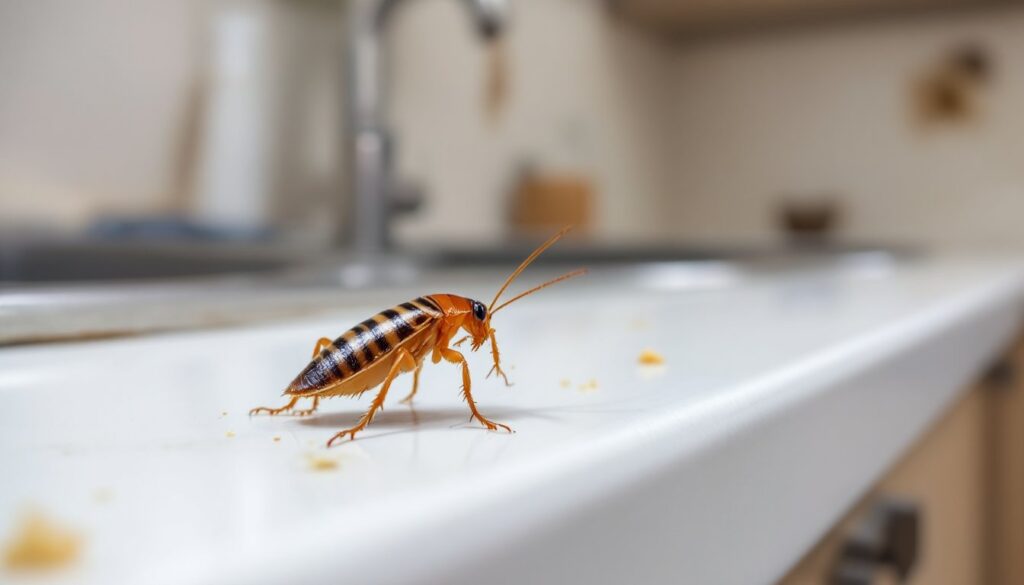
German roaches (Blattella germanica) are light brown to tan with two parallel dark stripes running down their backs, just behind the head. Adults measure about 1/2 to 5/8 inch long, making them smaller than American or Oriental roaches. Though they have wings, they rarely fly, preferring to scuttle at alarming speed when disturbed.
Look for them in warm, humid areas close to food and water. Prime hiding spots include:
- Behind and under kitchen appliances (refrigerators, stoves, dishwashers)
- Inside cabinets, especially near hinges and corners
- Around sinks, drains, and plumbing fixtures
- In cracks along countertops and baseboards
- Inside small electronics (microwaves, coffee makers, toasters)
German roaches are nocturnal. Spotting them during the day signals a heavy infestation, overcrowding forces them out of hiding. Also watch for fecal smears (small dark specks resembling pepper) along cabinet edges, and oval-shaped egg cases (oothecae) about 1/4 inch long, often tucked into tight crevices. A musty, oily odor in severe infestations is another giveaway.
If uncertain whether roaches are German or another species, capture one in a jar for comparison. Correct identification matters because control methods vary. German roaches require targeted baits and insecticides, generic bug sprays often scatter them without killing colonies.
Why German Roaches Are So Difficult to Control
Three factors make German roaches exceptionally tough opponents: reproduction speed, behavioral resistance, and insecticide resistance.
A single female produces up to 400 offspring in her lifetime. She carries the egg case until just before it hatches, protecting nymphs from most contact insecticides. Nymphs mature in 36 to 60 days under ideal conditions, meaning multiple generations overlap rapidly. Miss even a handful of roaches during treatment, and the population rebounds within weeks.
German roaches have also developed bait aversion. Some populations avoid glucose-based baits entirely, a learned behavior passed through generations. This means baits that worked a decade ago may fail today. Professionals now rotate active ingredients and bait formulations to overcome this resistance.
Insecticide resistance is widespread. Many German roach populations shrug off pyrethroids, once the go-to chemical class for cockroach control. Cross-resistance (resistance to multiple chemical families) further complicates DIY efforts. Relying on a single product or spraying indiscriminately often makes the problem worse by killing only susceptible individuals and leaving resistant ones to breed.
Their small size and cryptic behavior add another layer of difficulty. German roaches squeeze into cracks as thin as a dime’s edge. They avoid open spaces and light, so surface sprays rarely reach them. Effective control demands getting insecticide or bait directly into harborages, not just spraying visible surfaces.
DIY German Roach Control Methods That Actually Work
Best Baits and Insecticides for German Roaches
Gel baits are the most effective DIY option for German roach control. Unlike sprays, baits target the colony. Roaches consume the bait, return to harborages, and die. Other roaches feed on feces and dead bodies, spreading the toxin. This secondary kill is critical for reaching nymphs and adults that never encountered bait directly.
Recommended gel bait active ingredients:
- Fipronil (e.g., Maxforce FC Roach Bait Gel) – slow-acting, broad-spectrum, highly effective against resistant populations
- Indoxacarb (e.g., Advion Roach Bait Gel) – fast secondary kill, low resistance rates
- Hydramethylnon (e.g., Vendetta Roach Bait Gel) – colony elimination over 7-14 days
Apply pea-sized dots of gel bait in areas where roaches travel, not where people or pets can access it. Focus on:
- Cabinet hinges and corners
- Behind appliances and along appliance seals
- Under sinks and around plumbing penetrations
- Inside (unplugged) small appliances if infestation is severe
- Along the top edges of cabinets and behind switch plates
Do not spray insecticide near bait placements. Repellent sprays drive roaches away from baits. If combining methods, use non-repellent liquid insecticides like fipronil or imidacloprid in crack-and-crevice treatments. These products don’t repel roaches, they walk through treated areas, pick up the chemical, and carry it back to harborages.
For crack-and-crevice applications, use a tip-and-fan spray nozzle or a duster with boric acid or diatomaceous earth (DE). Apply dust lightly, a visible layer is too much and roaches will avoid it. Target voids behind baseboards, inside wall outlets (power off first), and under appliances.
Safety note: Wear nitrile gloves and safety glasses when applying any insecticide. Keep baits and dusts away from food prep surfaces. Always read and follow label instructions, these are legal requirements, not suggestions. If treating inside appliances, unplug them first and allow any applied product to dry before reconnecting power.
Rotate bait formulations every 3-6 months to prevent bait aversion. For professional-grade bait gels, homeowners often see a sharp decline in roach sightings within the first week of professional pest control treatments.
Natural and Non-Toxic Control Options
While less potent than synthetic insecticides, non-toxic methods can reduce populations and complement baiting strategies, especially in homes with young children, pets, or chemical sensitivities.
Boric acid is the most proven natural option. It’s a fine powder that adheres to roaches’ bodies: they ingest it while grooming and die within days. Apply a light dusting in areas roaches frequent but people and pets don’t access: behind appliances, inside wall voids, under cabinets. Boric acid loses effectiveness when wet, so avoid damp areas or reapply after cleaning.
Diatomaceous earth (food-grade only) works similarly, damaging the roaches’ exoskeleton and causing dehydration. Like boric acid, application should be sparse, too much and roaches walk around it. Wear a dust mask during application: DE is safe once settled but irritating if inhaled.
Vacuum frequently to remove roaches, egg cases, and fecal matter. Use a vacuum with a sealed bag or canister, and dispose of contents in an outdoor trash bin immediately. Vacuuming won’t eliminate an infestation but reduces population pressure and removes food sources (crumbs, grease, spilled pet food).
Essential oils and natural repellents (peppermint oil, bay leaves, catnip) may repel roaches temporarily but won’t kill them or prevent reproduction. They’re better suited for deterring entry than controlling established infestations. Some homeowners use cleaning strategies alongside natural methods to maintain hygiene, but sanitation alone won’t eliminate German roaches once they’re established.
Sticky traps (glue boards) help monitor roach activity and track control progress. Place traps along baseboards, under sinks, and behind appliances. Check weekly, if trap catches remain high after two weeks of baiting, reassess bait placement or consider professional help. Traps won’t control an infestation, but they’re useful diagnostic tools.
For homeowners managing infestations across multiple rooms, a combination of gel baits and boric acid dust often works best. Patience is essential, even successful treatments take 2-4 weeks to show significant reduction.
Preventing Future German Roach Infestations
German roaches don’t typically invade from outdoors. They hitchhike in on used appliances, furniture, grocery bags, cardboard boxes, and luggage. Inspect any secondhand items carefully before bringing them inside. Pull out drawers, check seams, and look inside electronics. If buying used appliances, leave them in a garage for a few days and inspect thoroughly, roaches will emerge seeking food and water.
Strict sanitation is the foundation of prevention. German roaches can survive on crumbs, grease films, and even toothpaste residue. Clean kitchens and bathrooms daily, focusing on:
- Wiping down counters, stovetops, and sinks (remove all grease and food residue)
- Sweeping and mopping floors, especially under appliances
- Storing food in airtight containers, never leave food out overnight
- Taking out trash daily and using bins with tight-fitting lids
- Cleaning behind and under appliances monthly
- Washing dishes immediately or loading them into a dishwasher
Eliminate water sources. Fix leaky faucets, pipes, and drains. Wipe down sinks and tubs before bed. German roaches can survive weeks without food but only days without water. For home organization ideas that reduce clutter and roach hiding spots, consider decluttering storage areas.
Seal entry points and cracks. Use caulk or foam sealant to close gaps around plumbing, baseboards, cabinets, and electrical outlets. Install door sweeps on exterior doors and weather stripping around windows. While German roaches rarely enter from outside, sealing cracks reduces hiding spots inside.
If living in an apartment or multi-family building, communicate with neighbors and property management. German roaches travel through shared walls, pipes, and vents. One infested unit can reintroduce roaches to treated units. Coordinated pest control efforts across all units are often necessary in multi-family structures.
Routine monitoring with sticky traps helps catch new infestations early. Place a few traps in high-risk areas (under kitchen sinks, behind refrigerators) and check monthly. Catching a few roaches early is far easier than battling hundreds later. For additional pest management strategies, consult resources on integrated pest management.
When to call a professional: If DIY methods fail after 4-6 weeks, the infestation is severe (roaches visible during the day, found in multiple rooms), or the home is a rental where landlord cooperation is needed, hire a licensed pest control operator. Professionals have access to stronger formulations, application equipment, and integrated strategies that combine baits, dusts, and growth regulators. They’ll also identify conducive conditions homeowners might miss.
Conclusion
German roach control isn’t a one-time fix, it’s a sustained effort combining targeted insecticides, sanitation, and vigilance. Gel baits and crack-and-crevice treatments outperform surface sprays. Natural methods like boric acid help in low-chemical environments but work slower. Prevention hinges on eliminating food, water, and hiding spots, plus inspecting anything brought into the home. Patience pays off: stick with the plan for at least a month, monitor progress with traps, and don’t hesitate to bring in a pro if the situation doesn’t improve.