Table of Contents
TogglePest control isn’t about winning a single battle, it’s about holding the line. Whether you’re dealing with ants marching across the countertop, mice scratching in the walls, or wasps claiming your eaves, the right approach combines prevention, timely intervention, and knowing when to call in backup. This guide breaks down what works, what doesn’t, and how homeowners can build a year-round defense against common household invaders. From sealing foundation cracks to choosing between bait stations and spray treatments, we’ll cover the practical steps that keep pests out and peace of mind in.
Key Takeaways
- Effective optimum pest control combines year-round prevention, early identification, and strategic intervention rather than reactive treatment alone.
- Seal foundation cracks, gaps around utilities, and openings smaller than ¼ inch, as rodents and insects exploit even tiny entry points to invade homes.
- Natural prevention—removing food sources, managing moisture, storing items in airtight containers, and trimming vegetation—eliminates the conditions pests need to thrive.
- DIY methods like snap traps, bait stations, and perimeter sprays work for minor infestations and prevention, but termites, bed bugs, and large infestations require professional pest control treatment.
- Call a licensed pest control professional immediately for termites (which cause $5 billion in annual U.S. damage), recurring infestations, or active colonies, as they use specialized equipment and EPA-registered products unavailable to homeowners.
- Maintain a seasonal maintenance schedule: inspect foundations and eaves in spring, eliminate standing water in summer, seal gaps in fall before rodents seek warmth, and monitor heat sources in winter when pests move indoors.
Understanding Common Household Pests and Their Impact
Identifying the enemy is step one. Different pests require different tactics, and misidentifying them wastes time and money.
Ants travel in colonies numbering thousands. Carpenter ants chew through wood framing, while pavement ants are mostly a nuisance. If you’re seeing winged ants indoors, that’s a mating swarm, a sign the colony is established and thriving.
Rodents (mice and rats) reproduce fast. A single female mouse can birth 5–10 litters per year. They gnaw electrical wiring, contaminate insulation, and spread hantavirus and salmonella. Droppings near baseboards, greasy rub marks along walls, and chewed packaging are telltale signs.
Cockroaches are resilient survivors. German roaches breed indoors and love kitchens. American roaches (often called “palmetto bugs” in the South) prefer basements and crawl spaces. Both spread allergens and bacteria. For targeted strategies, roach control methods that work in tight spaces.
Termites cause over $5 billion in U.S. property damage annually. Subterranean termites build mud tubes along foundation walls: drywood termites leave sawdust-like frass near wood. Both are structural threats requiring professional treatment.
Stinging insects like wasps and yellow jackets defend nests aggressively. A disturbed nest can send dozens of insects after you in seconds. Yellow jacket activity peaks in late summer when colonies are largest.
Spiders are mostly harmless and eat other pests, but brown recluse and black widow bites require medical attention. Most common house spiders, wolf spiders, cellar spiders, jumping spiders, are beneficial, but webs and egg sacs signal an active population.
Understanding pest behavior helps you target weak points: ants follow pheromone trails, rodents stick to wall edges, and cockroaches hide in warm, moist cracks.
Essential Prevention Strategies for Long-Term Pest Control
Prevention beats reaction every time. Most infestations start because homes offer three things: food, water, and shelter. Cut off access to these, and you’ve already won half the fight.
Sealing Entry Points and Eliminating Attractants
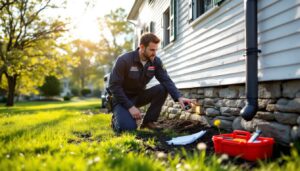
Inspect and seal gaps. Walk your home’s perimeter twice a year. Look for:
- Cracks in the foundation (fill with hydraulic cement or polyurethane caulk)
- Gaps around utility penetrations (seal with expanding foam or copper mesh for rodents)
- Torn window screens and missing door sweeps (replace with ¼-inch mesh or neoprene sweeps)
- Gaps under siding or fascia boards (use caulk or metal flashing)
Rodents can squeeze through openings as small as ¼ inch (mice) or ½ inch (rats). If a pencil fits, so can a mouse.
Manage moisture. Fix leaky pipes, clear clogged gutters, and ensure downspouts drain at least 6 feet from the foundation. Use a dehumidifier in basements and crawl spaces to keep relative humidity below 50%. Cockroaches and silverfish thrive in damp environments.
Store food properly. Use airtight containers (glass or heavy plastic) for pantry staples. Don’t leave pet food out overnight. Clean up crumbs and spills immediately, ants can detect sugar from several feet away.
Eliminate clutter. Pests love cardboard, paper, and fabric piles. Store holiday decorations in sealed plastic bins, not cardboard boxes. Keep firewood stacked at least 20 feet from the house and 6 inches off the ground.
Trim vegetation. Keep shrubs and tree branches at least 12 inches from siding and rooflines. Overhanging branches are highways for ants, rodents, and squirrels. Mulch should sit 3 inches below siding to prevent moisture wicking and pest access.
Maintain trash discipline. Use trash cans with tight-fitting lids. Rinse recyclables before tossing them. Take garbage to the curb the night before pickup, not days early.
These steps aren’t glamorous, but they’re the backbone of effective, long-term pest management.
DIY Pest Control Methods That Actually Work
DIY pest control works for minor infestations and ongoing prevention. For active, large-scale problems, it’s a stopgap until professional help arrives.
Natural and Chemical Solutions for Homeowners
Bait stations are effective for ants and roaches. Place gel baits (like Advion or Terro) along baseboards, under sinks, and behind appliances. Worker ants carry bait back to the colony, poisoning the queen. Results take 3–7 days. Replace dried-out bait weekly.
Snap traps remain the gold standard for mice. Use Victor or Tomcat traps with a dab of peanut butter. Set traps perpendicular to walls with the trigger side facing the baseboard. Check daily and dispose of carcasses in sealed bags. Glue traps work but are inhumane: live traps require releasing mice at least 2 miles away to prevent return.
Rodent bait blocks (like d-CON or Just One Bite) use anticoagulants. Place them in tamper-resistant bait stations in attics, crawl spaces, and garages, never where kids or pets can reach them. Be aware: poisoned rodents may die inside walls, causing odor for 1–2 weeks.
Insecticidal dust (diatomaceous earth or Delta Dust) works in wall voids, attics, and electrical boxes. It kills insects by damaging their exoskeletons. Use a hand duster and wear an N95 mask, this stuff irritates lungs. For wasps nesting in wall cavities, wasp control techniques often involve dusting entry holes at dusk.
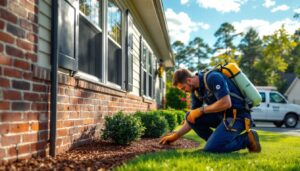
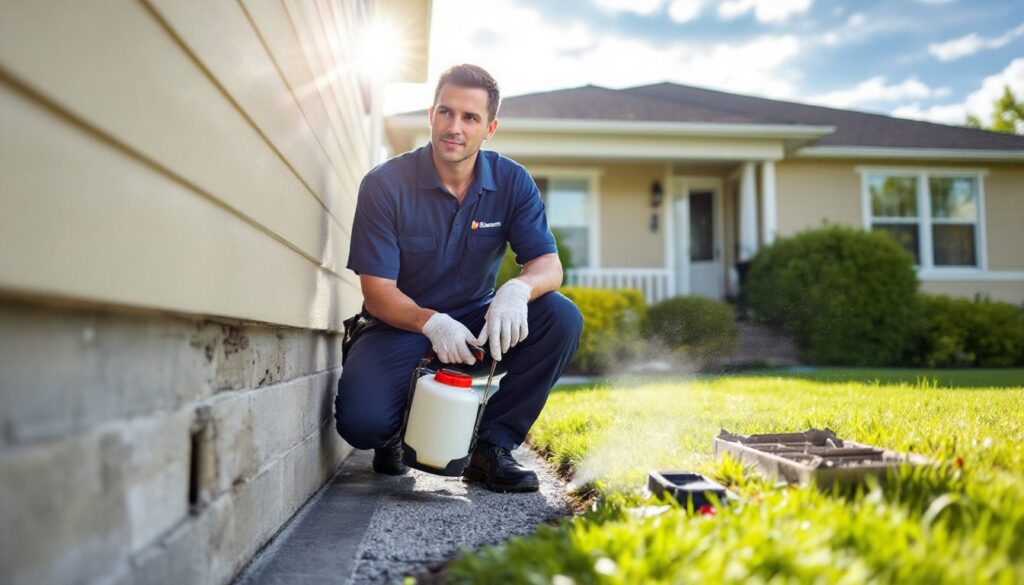
Perimeter sprays (pyrethroids like Talstar P or Bifen IT) create a chemical barrier. Mix concentrate in a pump sprayer and apply a 3-foot band up the foundation and 3 feet out on the ground. Reapply every 60–90 days or after heavy rain. These are broad-spectrum, they kill beneficial insects too, so use selectively.
Natural repellents (peppermint oil, diatomaceous earth, vinegar) have limited effectiveness. Peppermint may deter mice temporarily, but it won’t stop a hungry rodent. Diatomaceous earth works on crawling insects in dry locations but becomes useless when wet.
Traps for stinging insects include wasp traps (sugar-water or commercial lures) and yellow jacket traps. Hang them 20–30 feet from outdoor living areas to draw insects away. Don’t place them near doors or grills. Handling spider infestations often involves removing webs with a vacuum extension and sealing entry points.
Safety first. Always wear nitrile gloves, safety goggles, and a respirator when mixing or applying chemical treatments. Read product labels completely, mixing ratios, re-entry intervals, and PPE requirements vary. Keep children and pets away from treated areas until surfaces dry (typically 2–4 hours).
DIY methods work best as part of an integrated plan: sanitation + exclusion + targeted treatment. One-off efforts rarely solve persistent problems.
When to Call a Professional Pest Control Service
Some situations are beyond DIY scope. Knowing when to call in a licensed technician saves money, prevents structural damage, and protects health.
Call immediately for:
-
Termites. DIY termite control is largely ineffective. Professionals use liquid termiticides (like Termidor) or bait systems (like Sentricon) that require specialized equipment and training. Subterranean termite treatment often involves trenching around the foundation and injecting 100+ gallons of solution.
-
Bed bugs. These require heat treatment (120–140°F for several hours) or multiple chemical applications with EPA-registered products. Over-the-counter sprays rarely reach eggs hidden in cracks. A single missed bug restarts the infestation.
-
Large wasp or hornet nests. Nests in walls, attics, or high eaves are dangerous to tackle. Professionals have protective gear and can treat nests with residual dust or foam that kills the colony overnight. Bald-faced hornet nests (basketball-sized paper nests) require expert removal.
-
Active rodent infestations (more than a couple of mice). If you’re catching multiple rodents daily, the population is established. Pros use exclusion-first strategies, sealing every entry point with materials rodents can’t chew (metal, concrete), then trapping or baiting remaining individuals.
-
Recurring infestations. If you’ve treated twice and pests keep coming back, there’s an underlying issue, hidden entry points, moisture problems, or a nearby source (like a neighbor’s infestation). Pros have tools like thermal imaging cameras and borescopes to find hidden nests and entry routes.
When evaluating services, look for:
- State licensing and insurance (check your state’s pesticide regulatory agency)
- Integrated Pest Management (IPM) approaches that prioritize non-chemical methods
- Written estimates and treatment plans
- Service guarantees (most reputable companies offer free re-treatment if pests return within 30–90 days)
According to HomeAdvisor, average pest control costs range from $150–$300 for a one-time treatment and $400–$600 annually for quarterly service, though termite treatments can run $1,200–$2,500. Prices vary by region and infestation severity.
For specialized needs, certified pest control professionals bring training, commercial-grade products, and guarantees that DIY methods can’t match.
Permit and safety note: Some states require permits for fumigation or structural treatments. If a company proposes tenting your house or drilling into your foundation, verify they’re licensed for that level of work. Always ask for Safety Data Sheets (SDS) for any chemicals applied indoors.
Seasonal Pest Control: Year-Round Protection Tips
Pest pressure shifts with the calendar. A seasonal maintenance schedule keeps you ahead of problems.
Spring (March–May): Ants, termites, and wasps emerge as temperatures rise.
- Inspect the foundation for new cracks after winter freeze-thaw cycles.
- Check eaves and soffits for wasp nest-building (early nests are golf-ball sized and easy to knock down).
- Service crawl spaces: look for moisture, termite tubes, and rodent droppings.
- Set out ant bait stations as scout ants appear.
- Clean gutters and extend downspouts to prevent water pooling.
Summer (June–August): Peak activity for stinging insects, mosquitoes, and flies.
- Eliminate standing water weekly (birdbaths, gutters, plant saucers) to stop mosquito breeding. Larvae mature in 7–10 days.
- Mow grass and trim vegetation to reduce tick habitat. Outdoor enthusiasts should review tick control strategies before hiking or camping.
- Keep trash cans sealed and clean, fruit flies and houseflies breed in organic waste.
- Inspect attics for wasp nests. If you hear scratching at night, check for bats or squirrels (both protected in some states: call a wildlife removal specialist).
Fall (September–November): Rodents, spiders, and stink bugs seek indoor shelter as temperatures drop.
- Seal gaps around doors, windows, and pipe penetrations. Rodents are highly motivated to find warm spaces before winter.
- Vacuum up spiders and egg sacs in basements, garages, and storage areas.
- Store firewood away from the house and inspect each log before bringing it inside, spiders, beetles, and even snakes hide in woodpiles.
- Clean up fallen fruit and nuts to reduce rodent attractants.
- According to Good Housekeeping, this is also the time to deep-clean kitchens and pantries, removing crumbs and expired food that attract pests over winter.
Winter (December–February): Rodent and cockroach activity moves indoors. Pests hide near heat sources.
- Inspect under sinks, behind appliances, and in utility rooms for signs of rodents or roaches.
- Set snap traps in attics, basements, and crawl spaces.
- Check bait stations monthly and replace stale bait.
- Monitor for moisture issues, condensation on windows or pipes attracts pests.
- Don’t store cardboard boxes directly on basement floors: use shelving to keep items off damp concrete.
According to Angi, scheduling a professional inspection in early spring and again in fall catches problems before they escalate. Many pest control companies offer annual service plans with quarterly visits that align with seasonal pest cycles.
Year-round habits:
- Monthly perimeter walks to spot new pest activity or structural issues
- Weekly trash and recycling management
- Quarterly gutter cleaning
- Annual attic and crawl space inspections
Consistent attention beats reactive panic. Pests exploit neglect, tight seals, dry conditions, and clean spaces make homes far less inviting. The best pest control is the kind that happens before you see the first intruder.